

Sustainability

LCA and Its Importance
With the global transportation sector accounting for 37 percent of global CO2 emissions, regulators around the world are addressing this challenge by taking important steps. For the automotive industry, it means adopting stringent automotive greenhouse gas emission limits, fuel economy standards or a combination of both.
However, this focus concentrates primarily on tailpipe emissions, which isn’t a true representation of the total picture and can result in the adoption of strategies that can potentially increase emissions from other sources in the vehicle’s lifecycle.
Life Cycle Assessment, or LCA, takes a view beyond the tailpipe, measuring total greenhouse gas emissions across all phases of a vehicle’s life – from material and vehicle production through end of life. This perspective can help vehicle manufacturers and policymakers make decisions that drive effective, efficient solutions for vehicle emissions reduction.

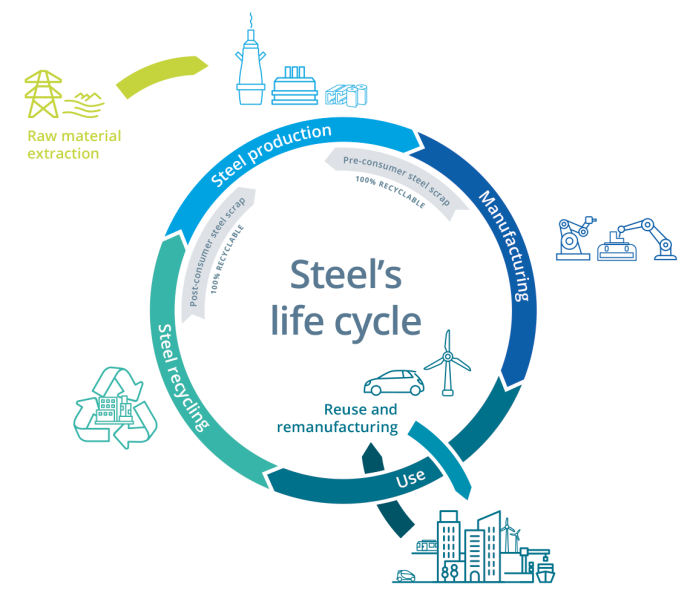
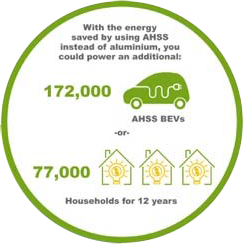
Steel's Advantages from a Life Cycle Perspective
Over the life cycle of a vehicle – it is clear that steel is the most environmentally effective material, driven by a number of factors.
Advanced High Strength Steels (AHSS) are the only material that reduce emissions in all three phases of a vehicle’s life:
- Steel has the lowest emissions per kg of any major structural automotive material, enabling reduced emissions in the production phase.
- Due to their high strength, AHSS can provide significant mass reduction, improving fuel consumption and reducing emissions during the use phase.
- Steel is infinitely recyclable, contributing to reduced emissions at a vehicle’s end-of-life phase.
LCA in Policy
As automakers continue to refine their sustainability strategies in order to meet stringent global emissions regulations, the importance of a life cycle perspective in vehicle emissions policies becomes a critical factor.
Not including it as part of a strategy means that critical pieces of a vehicle’s life cycle aren’t being considered and could result in potentially increasing, not decreasing emissions.
WorldAutoSteel actively advocates for LCA inclusion in the development of global vehicle emissions regulations. As a global association, it educates both automakers and policymakers on how LCA-driven policy can best support emissions-related legislation.
The organisation also collaborates with some of the world’s top universities in the LCA sector, including the University of California Santa Barbara, the Technical University of Berlin, the University of Michigan as well as Tongji University and Tsinghua University.
These partnerships have resulted in the development of tools designed to address automotive emissions from a life cycle perspective.
Automotive Greenhouse Gas Model
The WorldAutoSteel/UCSB Automotive Energy & GHG Model (“UCSB Model”) analyses the environmental impact of new vehicle design using Life Cycle Assessment (LCA).
This tool helps vehicle manufacturers evaluate emission savings over the full life cycle of a vehicle and is part of the steel sector’s contribution to a sustainable and competitive automotive industry.
The model enables evaluation of the differences in impact between alternative material vehicles of equivalent size, utility, equipment, and powertrain configuration. It reports Global Warming Potential (GWP) and total and fossil energy requirements per vehicle overall all three life cycle phases: Production, Use, and End-of-Life.
Developed under the leadership of Dr. Roland Geyer of the University of California’s Bren School for Environmental Science and Management, the methodology is fully parameterised and transparent, and the methodology peer reviewed. It is available as a downloadable spreadsheet to assist in conducting evaluations.
Download the free model and user guide at the links below: