
Predicting Weld Distortion Before It Costs You: New Simulation Insights from AHSS Application Guidelines
Building physical prototypes to catch weld distortion issues is expensive and slow—and by the time problems like poor part tolerances or visible panel warpage show up, critical decisions about welding equipment, fixtures, and process design have often already been locked in.
A new post on the AHSS Application Guidelines site explains how welding distortion simulation enables automotive engineers to predict these issues before a single prototype is built, using calibrated models that account for material properties, clamping conditions, and welding parameters.
Because advanced high-strength steels offer higher strength and stiffness to structural components such as sills, crossmembers, and the passenger safety cage, they’re particularly sensitive to weld-related shape deviations, making this kind of early-stage prediction especially valuable.
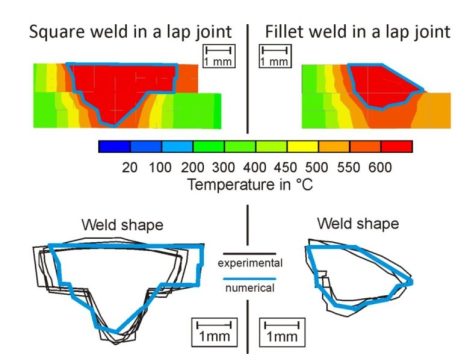
The post walks through how these models are built and validated, including a calibration method that compares real metallographic cross-sections to simulated molten zones and a case study showing simulated versus measured distortion in an actual automotive door structure.
It also explores how validated models let engineers test design variants—like adjusting clamping time—to reduce distortion without more rounds of costly physical trials, plus where the technology is headed next, including its growing role in designing steel battery enclosures with tight dimensional tolerances.
Read the full breakdown, with figures and technical detail, on the AHSS Insights blog: https://ahssinsights.org/blog/welding-distortion-simulation/